

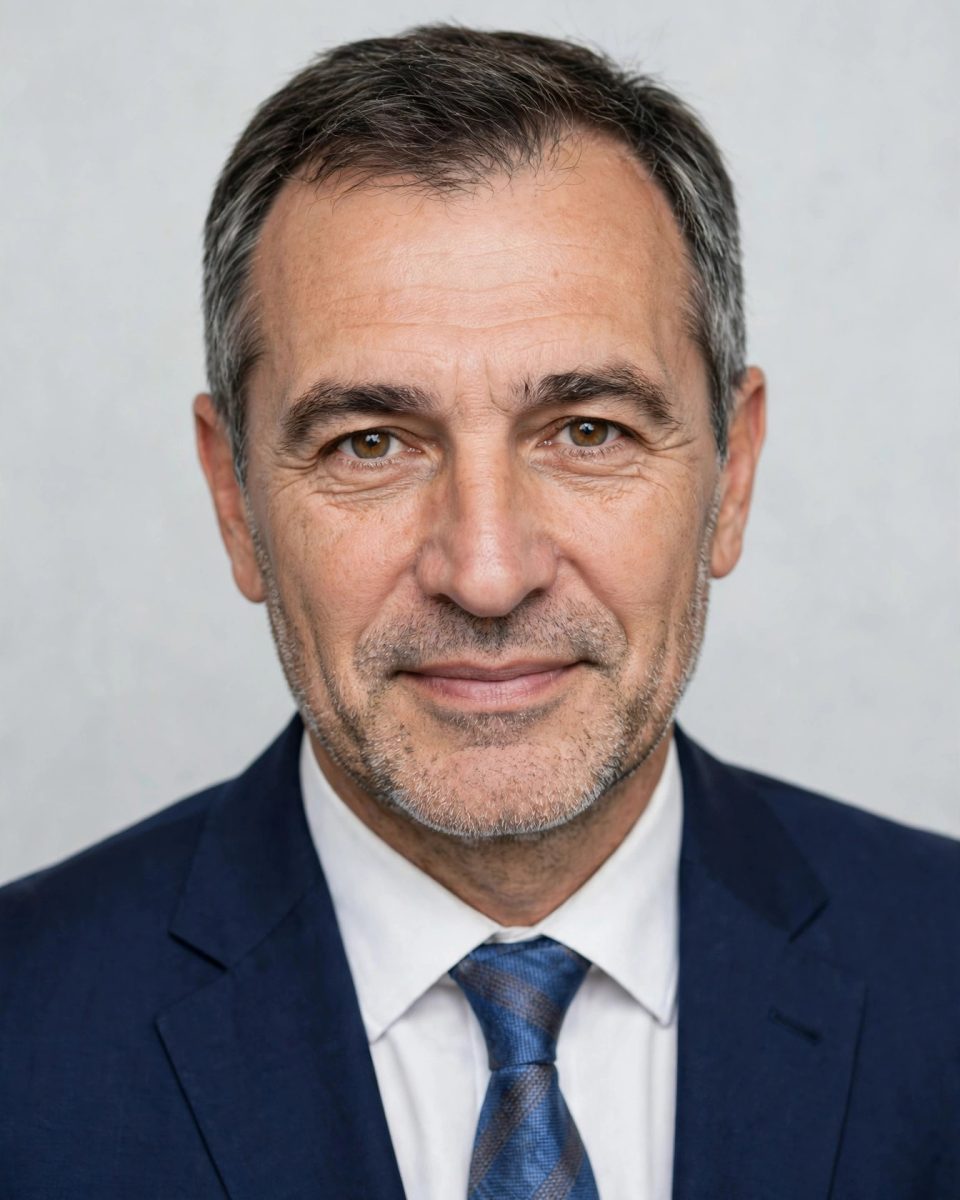
Candidate · Local elections 2027
Petrică Filip
Ialoveni · Cigârleni
Fictional person — demo content.
Biography
Petrică Filip was born on 19 February 1971 in the village of Cigârleni, Ialoveni district, into a family of winegrowers. After agricultural college he stayed in his home district, where he built his own winery step by step.
### Education
- (1987–1990) — Agricultural College, specialty: viticulture and winemaking
### Professional experience
- (1991–1996) — winery worker, Ialoveni district
- (1996–2004) — winegrower, lessee of vineyards
- since 2004 — winegrower and owner of a small winery (30 ha of vineyards), Cigârleni
He is married and, together with his wife, is raising three children.
### Key facts
- Year of birth: 1971
- Place of birth: Cigârleni, Ialoveni district
- Profession: winegrower
- Current position: owner of a small winery
- Education: Agricultural College, viticulture and winemaking
Views and principles
I am running for the Ialoveni District Council because our wine — the wine of small producers — deserves a place at the table, not just in the barrel.
I was born in Cigârleni. At twenty I worked at the winery, then I leased my first vines, and since 2004 I have had 30 hectares of vineyards and my own small winery. Every bottle I fill carries the taste of my village's soil.
Our problem is not quality — Moldovan wine can compete with anyone. The problem is that small producers have nowhere to sell, no access to subsidies, and cannot welcome tourists because the roads and infrastructure are missing.
If you elect me, I will fight for concrete things: a district support programme for small winemakers — from planting subsidies to help with certification; fairs and wine-tourism routes in Ialoveni; simpler trading rules. Wine must bring money into our villages, not just pride.
This candidacy is not about office — it is about responsibility. Together we can make the fruits of our labour feed our families.
Career analysis
Petrică Filip's career confirms, step by step, the qualities a voters' representative needs.
He started as a winery worker — he knows what physical labour, harvest season and delayed wages mean. He speaks the language of ordinary people because he was one of them.
Ten years of leasing taught him entrepreneurial risk: he invested, he lost, he learned. He understands the village's real economy — not from reports, but from his own pocket.
Building a winery from scratch — 30 hectares, equipment, certification, sales — is a better management lesson than any course: planning, negotiation, patience.
He tied his name and his business to Cigârleni: his wine comes from the grapes of his native village. He did not leave for money elsewhere — he invested at home. He is running to defend the interests of people like him: the district's small producers.